




Introduction
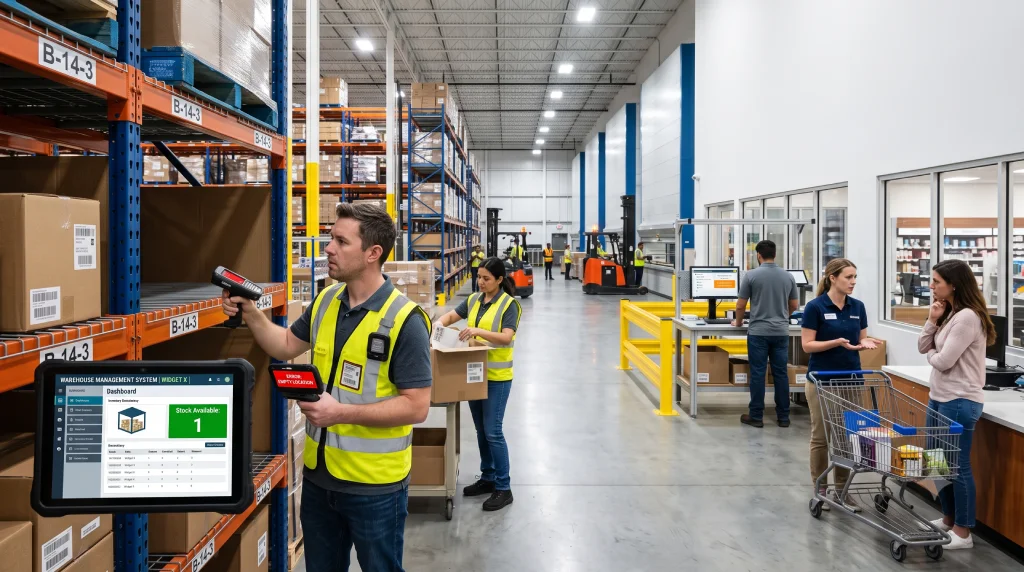
Every business owner or warehouse manager has experienced a variation of this operational nightmare: A customer walks into your retail storefront or clicks "Add to Cart" on your e-commerce website. Your point-of-sale (POS) or inventory software cheerfully displays that you have exactly one unit left in stock. The transaction goes through, the money is processed, and your team heads to the backroom or fulfillment zone to pick the item, only to find an empty shelf.
The item simply isn't there. It is a "ghost" product, existing only as bytes on a screen.
This scenario goes far beyond a minor, awkward inconvenience. It represents a deep, expensive operational failure. Discrepancies between physical inventory and digital records quietly siphon away thousands of dollars annually through lost sales, wasted payroll hours spent searching for missing items, and the long-term erosion of customer trust. When a customer walks away empty-handed, they don’t just take their current purchase with them; they often take their lifetime customer value straight to a competitor.
To build a highly profitable, friction-free business, you must consistently hit the ultimate operational milestone:
.webp)
Achieving this balance isn't just about spending weeks organizing shelves or buying identical plastic bins. It is the definitive track for unlocking maximum profits. The best part? Reaching this golden standard doesn’t require an expensive, overwhelming corporate restructuring. Instead, it relies on a sustainable philosophy of execution: small changes, big wins.
The Monthly Reality Check: Can You Sustain Perfection?
It is relatively straightforward to boast completely accurate inventory numbers immediately following a grueling, all-hands-on-deck annual stocktake. When your business shuts down for a weekend and everyone counts items with clipboards, your records will naturally match reality.
But what happens three weeks down the line? What does your data look like after a chaotic holiday rush or a sudden spike in order volume?
The true metric of operational health isn't your annual audit accuracy—it’s consistency. You have to ask yourself honestly: Can you achieve this every single month?
.webp)
Scenario A: If your answer is YES...
Congratulations! You've won half the battle. Successfully keeping your physical stock aligned with your digital logs on a month-to-month basis places your business in an elite tier of operational efficiency.
You may even feel ready to skip standard introductory guides on basic stock management. However, complacency is the ultimate profit killer. Even the most disciplined manual workflows are vulnerable to human error as order volumes scale.
To protect your margins and future-proof your growth, you must continuously audit your systems and stay ahead of the latest technology trends for your business.
Scenario B: If your answer is NO...
Don't panic—you are in the absolute majority. Most expanding businesses find it incredibly difficult to maintain perfect data integrity while balancing day-to-day fulfillment, vendor management, and customer service.
It is deeply frustrating to watch your hard-earned profit margins shrink due to unexplainable inventory variances, unexpected stockouts, and phantom stock.
Acknowledging this gap is an opportunity, not a failure. To fix this trajectory, your immediate goal is to strengthen further and remove any hidden leaks!
Small Changes, Big Wins: Finding and Fixing Hidden Leaks
When a business suffers from inventory discrepancies, it’s rarely because a massive, coordinated warehouse heist took place. Instead, profitability is drained slowly by a "death by a thousand cuts", minor, daily system gaps known as hidden leaks.
What exactly are "Hidden Leaks"?
These are the small, routine administrative oversights that quietly compound over time:
Human data-entry errors: A rushed employee accidentally keys in a SKU number as a quantity or types "11" instead of "1".
Unrecorded damaged goods: An item gets damaged or dropped on the warehouse floor. Instead of being properly logged as a write-off in the system, it is thrown directly in the trash, leaving a permanent mismatch on your digital dashboard.
Administrative delays: New inventory arrives at the loading dock, but because the receiving team is busy, the items sit on pallets for days. Meanwhile, the digital system shows zero stock, causing you to lose out on active sales.
Plugging these leaks doesn't require complex, over-engineered software configurations or massive capital investments. By focusing on small changes big wins, you can drastically improve your numbers through disciplined micro-adjustments to your daily habits.
Actionable Small Changes to Implement Today:
Standardize your receiving process: Designate a specific "intake zone." Ensure no item is placed on a storage shelf or sales floor until it has been scanned, verified against the purchase order, and officially welcomed into your system.
Cultivate staff accountability: Establish clear, simple logging habits. If an employee moves stock from a backroom to a display shelf, or moves an item to a quarantine zone, that movement must be tied to a quick, friction-free digital update.
Enforce an immediate data-entry rule: Ban the habit of saving paperwork for the end of the day or the end of the week. Inventory tracking must happen in real time; an unrecorded transaction is an inaccurate transaction.
The Next Step: Transitioning to Live Inventory Tracking
While sharpening your manual habits creates a reliable foundation, relying strictly on spreadsheets, physical ledgers, or retrospective monthly counts means your business will always be playing catch-up. Manual tracking is inherently reactive, it alerts you to a costly mistake weeks after the money has already left your bank account.
To sustainably protect your business and maximize your profits, the next logical step in your evolution is clear: Implement live inventory tracking.
Moving to a live tracking environment updates your perspective from hindsight to foresight. Instead of reviewing historical errors during end-of-month reconciliations, you gain absolute control over your operational reality as it unfolds.
.webp)
The Strategic Benefits of Real-Time Data:
Omnichannel visibility: View precise, synchronized stock levels across your physical storefront, multiple warehouses, and various online e-commerce platforms simultaneously.
Automated reorder alerts: Never experience a stockout on your best-selling items again. Set smart threshold alerts that automatically notify you or generate purchase orders before your inventory dips into dangerous territory.
Elimination of the month-end headache: Free your staff from the dreaded, exhausting manual cycle counts that bring business productivity to a grinding halt.
V. Conclusion & Call to Action: Audit Before It Costs You
Maintaining a perfect match between your physical stock and your digital record books shouldn't feel like an occasional miracle—it should be your everyday business standard.
Do not wait for an expensive accounting nightmare, a massive tax discrepancy, or a botched peak-season rush to address your tracking vulnerabilities.
Audit before it costs you
Upgrading your infrastructure and isolating your operational leaks doesn't have to be a costly, stressful gamble. In fact, getting an expert analysis of your current pipeline is entirely risk-free.
"Consultation call with us will not cost you."
Let's plug your hidden leaks, streamline your warehouse operations, and put your business on the direct track to maximum profitability.
Get in touch with the Bitsware team today to map out your custom path forward:
Phone: +91-807 179 2487
Next Step: Contact us directly to book your complimentary, no-obligation operational workflow strategy session.